.svg)
.svg)
.svg)
.svg)
.svg)
Embarking on piano lessons can spark a lifelong love of music for your child. Children as young as 4–5 years old can start learning piano using fun, age-appropriate methods. Though every child develops differently.
Piano lessons for kids can open doors to creativity, confidence, and discipline. This guide answers your top questions: costs, finding the right teacher, choosing an instrument, practice tips, and local LA-based options, so you can start them off on the right note.
When should my child start piano lessons?
Whenever your child shows curiosity and can sit still(ish) for 15–30 minutes.
Here’s the real deal:
Forget the myth that if your child doesn’t start at 4, they’re doomed. Some start at 5, others at 10, and many well into their teens or adulthood. All of them can succeed.
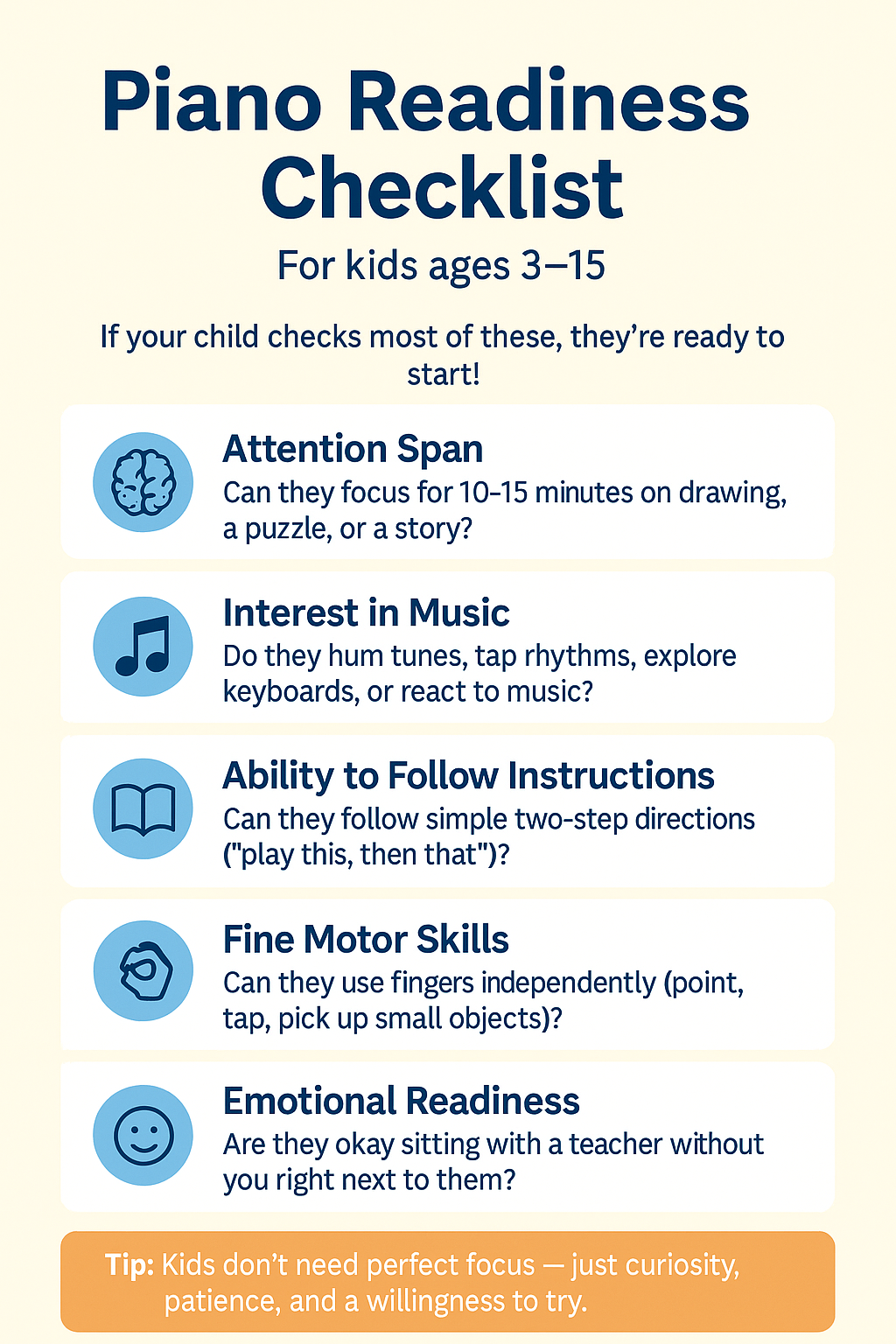
What matters more than age is readiness:
- Can they focus for 15+ minutes?
- Do they show interest in music or instruments?
- Can they follow simple instructions?
If yes, you’re good to go. In fact, older kids often catch on faster, they’ve got better motor skills, focus, and motivation. So, whether your child is 6 or 16, starting now is just fine.
Should we start with private or group lessons?
Go private, if you can afford. Your kid deserves that 1-on-1 attention.
Why private works best:
- Stronger foundation
- No comparison pressure
- Faster corrections and clearer feedback
- Lessons adapt to your child’s pace and personality
When group lessons help:
Group classes are great introductions for very young kids (3–5), learners who like company, or families wanting a low-cost starting point. They’re fun, social, and build comfort, but may risk your kid developing bad habits or muscle memory because of a lack of attention.
How much do piano lessons cost in Los Angeles?
Short answer: $50–$150 per lesson, depending on lesson length and teacher.
The full picture:
Los Angeles pricing varies a lot by neighborhood and teacher qualifications. At Angeles Academy of Music, you’ll find:
- 30-minute lessons: ~$218/month
- 60-minute lessons: ~$436/month
Prices are slightly higher in areas like Beverly Hills or Westwood, and a bit lower around Tarzana or Encino. But here’s the thing: you’re not just buying time, you’re investing in a skill your child will carry for life.
Private lessons may seem pricey, but the value is huge:
- Personalized pace
- Individualized feedback
- More motivation = better retention
Pro tip: We offer discounted sample classes (especially during the holidays). If after the first class it’s not the right fit, we’ll refund the rest of the month... no worries.
For a more in-depth guide to Los Angeles piano lessons’ pricing, read our article on how much piano lessons cost in LA.
How do I choose the right piano teacher for my child?
Someone who knows how to teach kids, not just play well. The best pianist is not always the best teacher. Instead, find someone who knows how to teach kids: they should have proven teaching experience and a warm, flexible approach.
For example, a good teacher can adapt to your child’s personality and learning style, rather than insisting on just one method.
Here's the truth:
A top-tier concert pianist isn’t always a great teacher. For your child, you want someone who:
- Has actual experience teaching kids
- Is patient, upbeat, and engaging
- Can adapt to your child’s learning style
- Makes learning feel fun, not like a math test
These are the qualities of a good teacher for children's piano lessons.
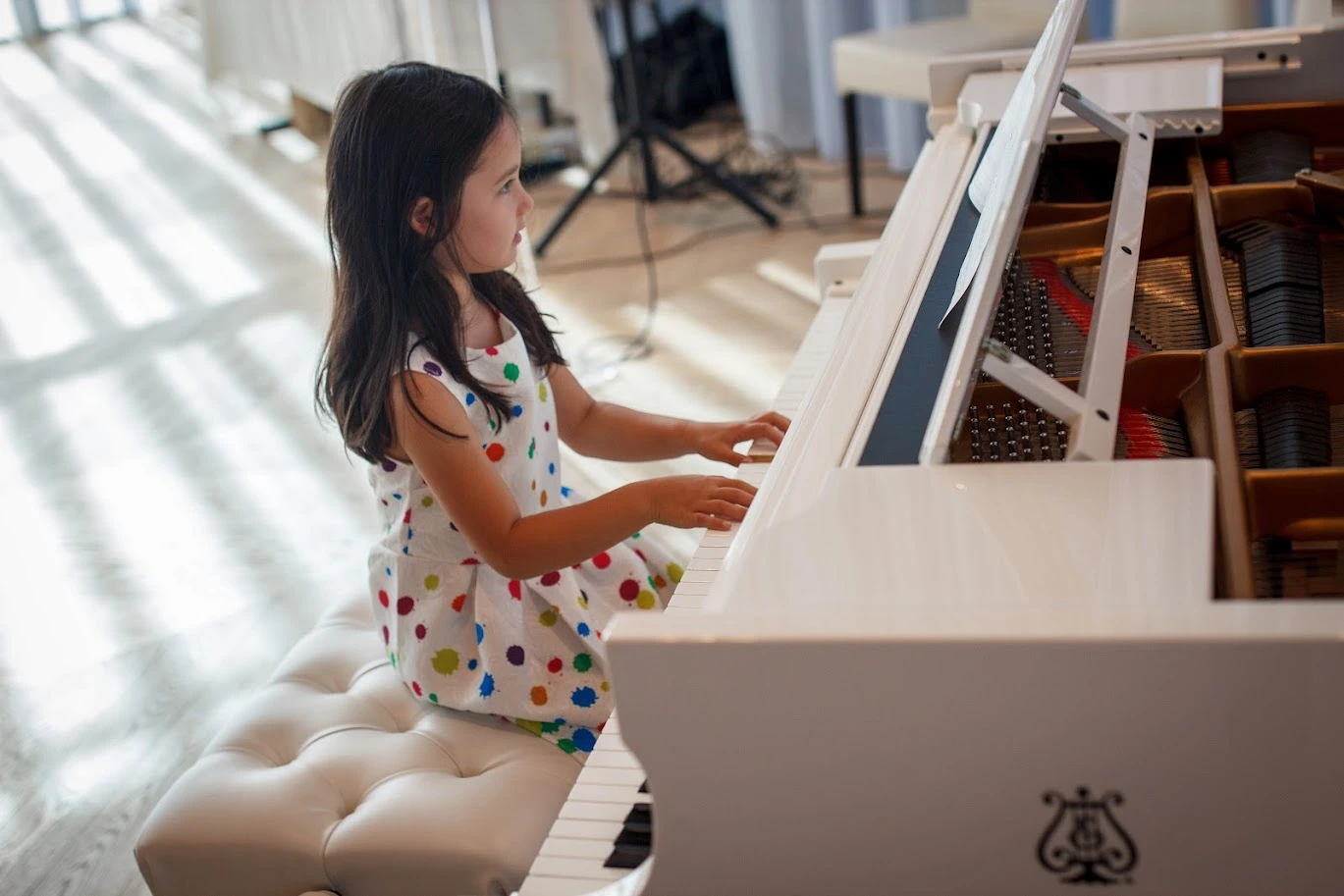
We, at Angeles Academy of Music, only hire teachers with formal music training and a great bedside manner. We’ve heard from parents in Santa Monica and Woodland Hills that what made the biggest difference wasn’t the teacher’s resume; it was how they connected with their child.
Do I need to buy a piano?
Not a grand, but yes, you need a real instrument your child can practice on.
Here’s what you can look for:
The truth is simple: if you want your child to make real progress, you need something with proper keys, proper feel, and proper feedback.
Studies (and every piano teacher ever) show that kids who start on toy keyboards quit earlier; they can’t produce satisfying sound, build technique, or feel progress.
- If you're in a tight apartment → a digital piano with headphones is perfect.
- If you're in Tarzana or the Valley with more space → a digital or acoustic both work.
- If you're not ready to buy → many parents rent, or studios (including ours) sometimes allow practice before/after lessons.
Should we get a piano, digital keyboard, or an acoustic?
Start with a good digital piano unless you already own an acoustic upright or grand.
Here’s the simple rule:
- Digital piano = Best starter option for most families
- Acoustic piano = Best long-term option if you can afford it + maintain it
- Tiny keyboards = No
A well-made digital piano:
- Feels close to a real piano (thanks to weighted keys)
- Sounds satisfying
- Never needs tuning
- Allows quiet practice with headphones
- Often includes fun learning tools that keep kids engaged
This matters because the better the keys feel, the more motivated your child becomes. Kids love hearing themselves make beautiful sounds, even on day one.
Key Features to Look For:
- 61-88 keys
- Weighted or graded hammer action
- Touch sensitivity
- Pedal support
While choosing keyboards or pianos, avoid keyboards with springy, flimsy keys or synthesizer-style plastic sounds. These don’t help develop finger strength, control, or musicality.
How much should my child practice?
Short answer: 10–20 minutes a day is a great start.
But here’s the truth:
It’s not about quantity. It’s about consistency. Regular, short sessions beat marathon Sunday practices every time. A few guidelines:
- Beginners (ages 5–7): 10–15 minutes/day, 5 days/week
- Ages 8–12: 15–25 minutes/day
- Teens: 30+ minutes if they’re serious
Make it part of the routine: after school, before dinner. And yes, bribes are allowed (chocolate, stickers, screen time… you do you).
And here’s the part no one tells you:
Once your child learns the basics and their hands develop a bit of muscle memory, something magical happens: they start enjoying it. Like, genuinely. Kids who once needed reminders suddenly sit down and play on their own for long stretches because it feels good.
Your job shifts from “Please go practice” to:
- Helping them build good technique
- Encouraging curiosity
- And letting them discover the calm, pleasure, and self-expression that piano brings
Hand-hold them through the discipline.
Let them fall in love with the music on their own timeline.
That’s how lifelong musicians are made.
How do we stay motivated long-term?
Just make it fun, visible, and social.
Motivation Tips that actually work:
- Learn songs your child already loves. Yes. Minecraft music, Mario themes, Taylor Swift… whatever keeps them excited. If you need ideas, here's a list of the easiest piano songs for practice for kids.
- Record their progress and send it to grandparents (they will hype your child like nobody else).
- Celebrate milestones, not perfection. “You played the whole left hand today!” is a win.
- Let them perform. Mini-home concerts, recitals, or even a silly TikTok. They all make music feel real.
Angeles Academy of Music hosts friendly, low-pressure recitals so kids can shine, even if it’s just their first verse of a song. Parents from Century City, Encino, and The Valley often tell us that performing - even for a tiny audience, boosted their child’s confidence and made lessons feel meaningful.
What if my child struggles or doesn’t want to practice?
Keep things light, flexible, and encouraging. Resistance is normal. Adjust the approach, not the dream.
Here’s what most parents don’t realize:
Kids resist practice for the same reason they resist brushing their teeth: it’s not immediately rewarding, and Roblox exists. That’s okay. What matters is creating small wins and keeping music connected to joy.
What helps:
- Let them choose one song. Even if it’s a Pokémon theme. Ownership = motivation.
- Make it social. Try a parent-child jam session or let a sibling join.
- Use apps or games that reward little bursts of practice (Simply Piano, Piano Maestro, etc.).
- Break tasks into tiny chunks. One line at a time, not the whole piece.
- Rotate styles. Pop songs, movie themes, and simple improvisation can wake up a bored learner.
When kids feel curious and capable, they self-motivate far more than if they feel pushed.

If the struggle becomes consistent:
Stop and troubleshoot, not punish.
Ask yourself:
- Are the pieces too hard?
- Is the lesson style too rigid?
- Does the teacher’s energy match your child’s personality?
Try:
- A simpler method book
- A new teaching style
- A music game day
- A different repertoire (some kids thrive on pop or soundtracks)
And if nothing works for weeks?
A temporary break can reset things. Sometimes a switch in teachers, or even joining a short-term “piano playgroup,” reignites interest.
The golden rule:
Forcing daily misery never creates musicians; it creates burnout.
Nurture their natural spark instead of pushing a fake one.
Where can I find piano lessons for kids near me in LA?
Closer than you think. Angeles Academy of Music offers private piano lessons for kids at three convenient Los Angeles locations:
- Westwood Village (near UCLA, Bel Air, Beverly Hills, Century City)
- Brentwood (serving Santa Monica, Brentwood proper, and surrounding areas)
- Tarzana (perfect for Woodland Hills, Encino, and the greater San Fernando Valley)
All lessons are private and tailored to your child’s age, level, personality, and pace.
One smart move? Reach out to a well-rated music school (like Angeles Academy) that actually centralizes the info. You can specify your zip code and your child’s level, and they’ll match you with a teacher who fits.
“Near me” doesn’t have to mean “on my block.” In LA, a short drive to the right teacher is often worth it. Still, with locations across West LA and The Valley, it’s easier than ever to find a spot that fits your family’s schedule.
Most Commonly Asked FAQs by Parents
My child is only 3. Are they too young to start piano lessons?
Not necessarily. While formal piano might be too structured, “keyboard readiness” programs for ages 3–5 focus on rhythm, movement, and music play - perfect for curious little ones.
Are online piano lessons worth it for kids?
They can be. Many LA teachers offer Zoom lessons, which are handy when traffic’s brutal. Just make sure your child can stay focused and has a quiet, screen-friendly setup.
That said, nothing beats 1-on-1 in-person instruction, especially for younger kids who benefit from hands-on guidance, clearer personal communication, more vigilance, hand-holding, and the magic of playing music face-to-face.
Will my kid get bored with lessons?
Not if the teacher’s good. Great lessons are dynamic, mixing songs, theory, games, and even some improvisation. If your child is yawning, it’s time to chat with the teacher.
How do I make practice more fun at home?
Make it a shared thing. Ask them to teach you a song. Use stickers or apps for rewards. Celebrate tiny wins and keep it playful, not pressure-filled.
How can I support their learning if I’m not musical?
Just show up. Ask what they’re working on. Clap along. Praise effort. Attend their recitals, or even have “Grandma concerts” at home. It means more than you think.
Where can I find extra sheet music or practice tools?
Start with what the teacher recommends. Then check out sites like 8notes.com or MusicNotes.com. Apps like Flowkey or Simply Piano can add some fun, but keep it aligned with their main lessons.
Final Thoughts
Music isn’t just a skill. It’s an outlet, a confidence-builder, and in many cases, a sanctuary. You’re not just helping your child learn piano. You’re giving them a voice without words.
Want to see if it’s a fit for your family?
Try a private piano lesson with us here.
Angeles Academy of Music is known for the best piano lessons Los Angeles has to offer. We’re excited to help your child love music... not just play it.
.svg)
%202026%202027.jpeg)


.svg)

