.svg)
.svg)
.svg)
.svg)
.svg)
If you’ve spent any time Googling “piano practice rooms near me” in Los Angeles, you’ve likely encountered the same grim reality I have: a wasteland of drum-bleed-heavy rehearsal warehouses in North Hollywood or community college waitlists.
The quality is bad, and the outside noise is worse. And for a serious pianist - someone who needs pristine acoustics, a tuned instrument, and zero distractions, the rental market is often a non-starter.
So, let’s pivot. Instead of hunting for the perfect room, let’s build one.
Whether you’re a founder looking for a high-ROI home improvement project or a musician tired of competing with rock bands next door, here is the technical, acoustic, and economic guide to building a dedicated piano studio in Los Angeles.
Phase 1: The Shell (Physics vs. Neighbors)
The first rule of audio engineering is one that most DIYers get wrong: Soundproofing and Acoustic Treatment are not the same thing.
- Soundproofing is keeping the outside world out (and your scales in).
- Acoustics is making the piano sound good inside the room.
In Los Angeles, where "luxury apartment" often translates to "walls made of paper," soundproofing is your primary battle.
The "Room-in-Room" Gold Standard
If you own your home and have a budget, the only way to achieve true isolation is decoupling. You are essentially building a floating room inside your existing room.
- The Tech: You need to break the mechanical connection between your drywall and the studs. This involves using Resilient Channels or Hat Channels with isolation clips.
- The Mass: Sound waves are lazy; they hate traveling through heavy mass. Add a layer of Mass Loaded Vinyl (MLV) sandwiched between two layers of 5/8” drywall.
- The Cost: Expect to pay roughly $150–$300 per sq. ft. for professional isolation construction in LA.
The "Renter Friendly" Realist Approach
Can’t tear down walls? Focus on the weakest links: windows and doors.
- The Door: A solid-core door is non-negotiable. If you have a hollow-core door, you might as well have a curtain. Add a drop seal (automatic door bottom) to close the air gap at the floor. If air can get through, sound can get through.
- The Windows: LA noise ordinances generally kick in strictly between 10:00 PM and 7:00 AM. To play late, you need window plugs. You can build these yourself using MDF board and Green Glue for a fraction of the cost of "soundproof curtains" (which, frankly, don't work for piano frequencies).
Phase 2: The Acoustics (Don't Kill the Room)
Most amateur studios make the mistake of covering every inch of wall with cheap foam wedges. The result is a "dead" room that sucks the life out of a piano’s high end while leaving the muddy bass frequencies booming.
Piano acoustics are about balance.
If you want to practice piano at home without worrying about neighbors or noise complaints, isolation matters more than aesthetics.
- Bass Traps
Pianos generate a ton of low-end energy, and bass is the hardest thing to control. The fix is bass traps in the corners of the room.
You don’t need boutique panels. Rockwool (or mineral wool) is affordable, easy to find, and incredibly effective. DIY panels made with 4–6 inches of Rockwool, wrapped in fabric, will outperform most store-bought foam.
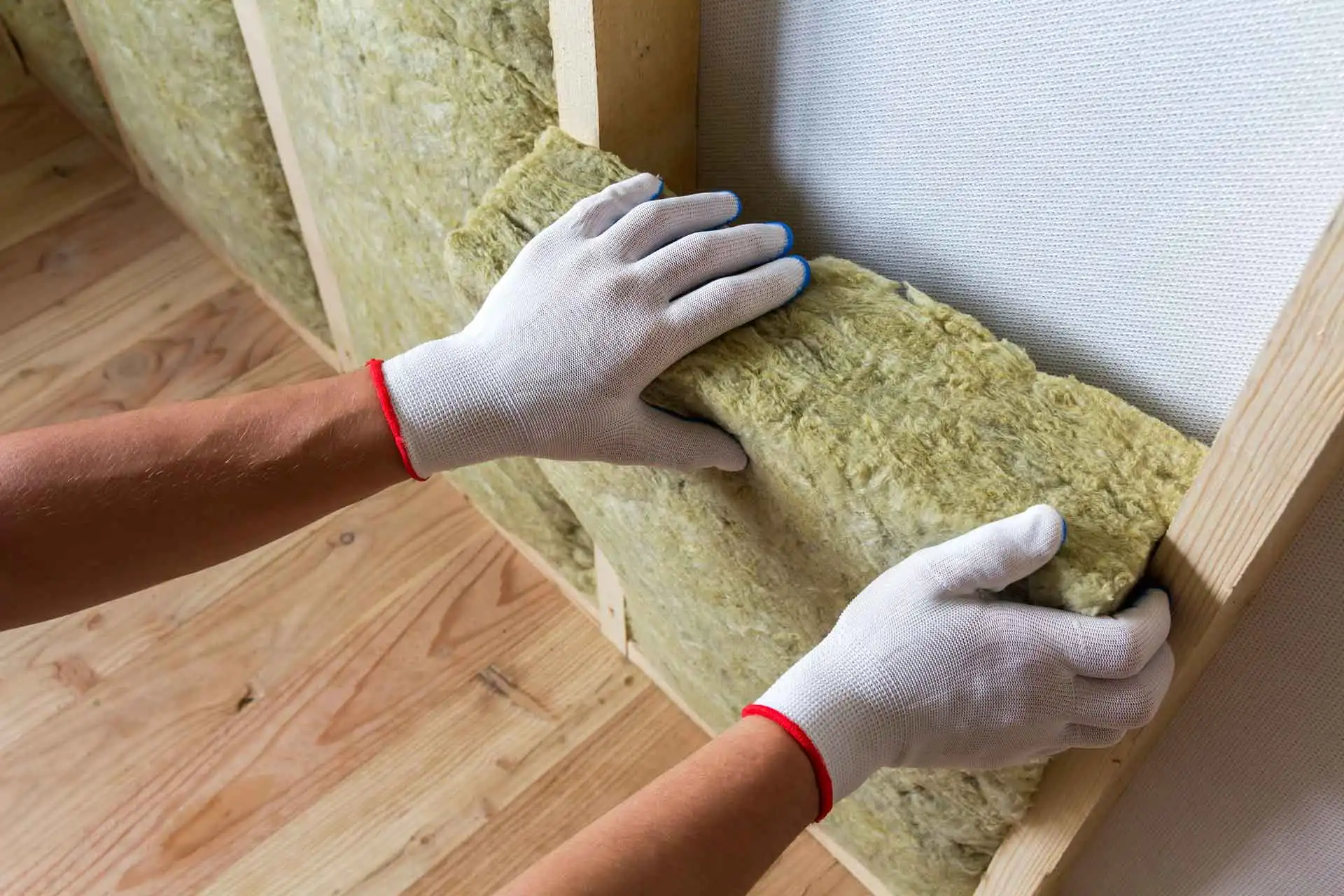
Put them in vertical corners, and suddenly the room tightens up and your low notes stop rumbling and start sounding musical. That C2 should feel powerful, not like a truck passing by.
- Diffusion > Absorption
In a small room (like a spare bedroom in Silver Lake), absorbing everything is a mistake. You’ll end up feeling like you’re playing inside a padded cell.
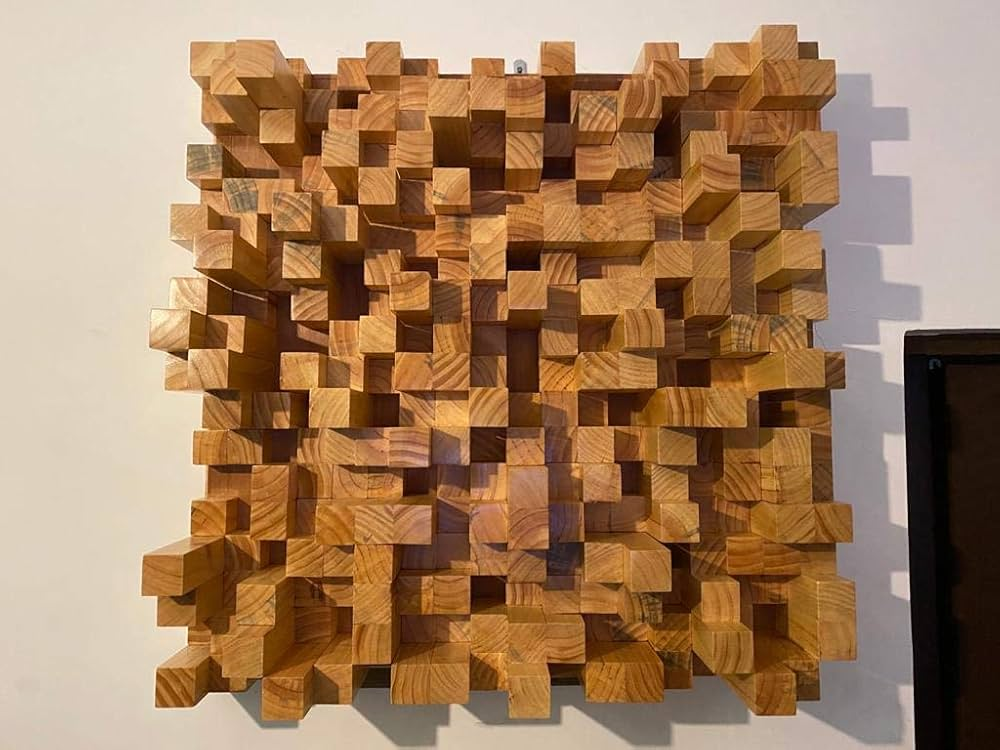
Instead, balance absorption with diffusion. Diffusers - those wood block or slat-style panels: scatter sound rather than killing it. Put one on the back wall behind you, and the room instantly feels bigger, more open, and more “concert-like,” even if it’s still just a bedroom.
- Rockwool vs. Foam (The Simple Rule)
Foam helps a little with high notes.
Rockwool helps where the piano actually lives: the low and mid range.
If you’re choosing one, choose Rockwool.
- The Floor
If you have hardwood floors, you need a thick rug under the piano. This isn’t just about looks. It cuts harsh floor reflections and makes uprights sound warmer and more controlled.
Phase 3: The Instrument (The LA Factor)
If you are building this room, you need a workhorse.
- The Upright King: Yamaha U1 or U3
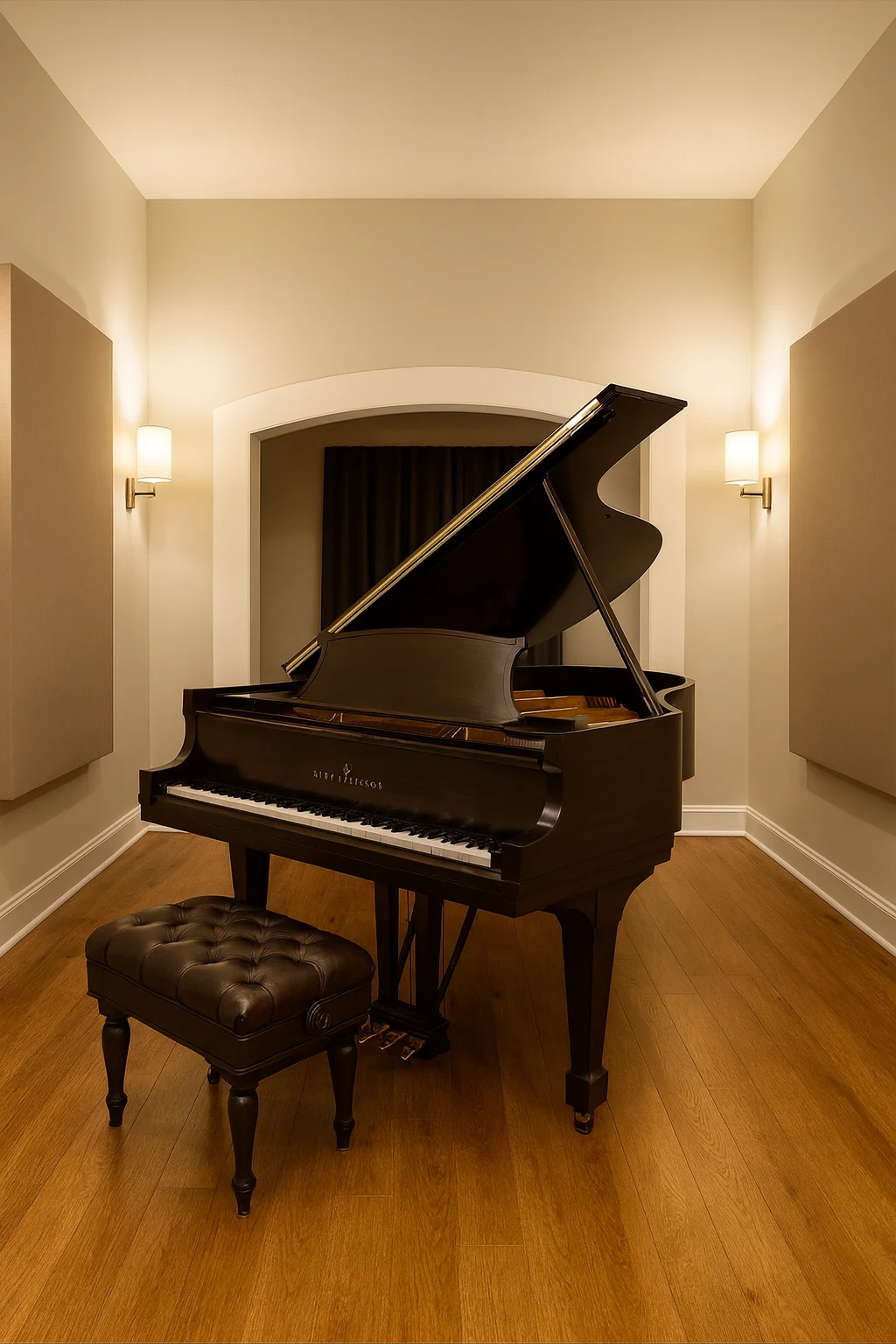
For a home studio, a grand piano often eats too much floor space (and overwhelming volume). A used Yamaha U1 or U3 is the sweet spot. They hold their tune, have excellent action, and are ubiquitous in LA.
If you're a student, read our article on how to select a piano or a keyboard for your practice.
- Market Rate
You can find a "Grey Market" (imported) U1 in LA for $3,500–$5,000. New ones run closer to $8k-$10k.
- The "Santa Ana" Defense
Los Angeles has a unique climate problem: We swing from humid coastal fog to bone-dry Santa Ana winds. This fluctuation destroys soundboards and tuning stability.
- The Fix
You must install a Damp-Chaser Piano Life Saver System. It’s a climate control unit installed inside the piano that regulates humidity to 45%. It costs about $500–$600 installed, but it saves you thousands in repairs and tuning.
- The "Silent" Option
If you have neighbors who work from home (very LA), consider a Silent Piano or a hybrid. This is a real acoustic piano that allows you to lock the hammers and play digitally via headphones. It’s the ultimate cheat code for 2 AM practice sessions.
Phase 4 (Optional): The Business Angle (Rent It Out)
Here is where we put on the business hat. A soundproofed, acoustically treated room with a tuned Yamaha U1 is a scarce asset in Los Angeles.
The same problem that annoyed you: lack of quality rooms. That is your market opportunity.
The Economics:
- Peerspace/Tagvenue Rates: Verified acoustic piano rooms in LA rent for $25–$60 per hour.
- Utilization: If you rent the room for just 10 hours a week at $30/hr, that’s $1,200/month in revenue.
- Niche Demand: Market it specifically to piano teachers who need a satellite studio, or vocalists who need a pitch-perfect rehearsal space.
You aren't just building a practice room; you’re building a micro-location independent business.
The Verdict
Building your own room requires upfront capital and a bit of sweat equity, but the payoff is freedom. No commute to a warehouse, no scheduling conflicts, and an asset that can pay for its own upkeep.
However, if you aren't ready to tear down drywall or negotiate with contractors, there is still one verified way to get access to world-class instruction and facilities without the construction dust.
Angeles Academy of Music offers professionally designed piano rooms exclusively for our students. If you’re looking for a structured, high-quality learning environment, we have locations in Brentwood, Westwood, and Tarzana.
.svg)
%202026%202027.jpeg)



.svg)

