.svg)
.svg)
.svg)
.svg)
.svg)
You're 25. Or 35. Or 45. Or 65. Or maybe you're 52 and you took piano lessons as a kid, quit in high school, and haven't touched a keyboard in thirty years.
Maybe you're sitting at a bar and a song comes on... something you actually want to play. Or you're watching someone at a restaurant, fingers flowing across the keys like it's the easiest thing in the world, and you think: I wish I could do that.
Then comes the second thought. The one that kills it.
But I'm too old. I don't have the talent. I already tried this before and failed. It's too late.
Here's the truth: it's not.
In our music school in Los Angeles, we teach adults piano lessons every single day: returners, restarters, people who quit mid-journey, and adults from their 20s all the way to their 70s who walked in believing they'd missed their window.
They hadn’t. And neither have you.
Let’s dive in.
Can Adults Actually Learn Piano? Even Starting in Their 20s, 30s, or Beyond?
Yes. Adults of any age learn piano constantly. Age is not your enemy. Ego is.
Here's what nobody tells you: kids have one massive advantage over adults. They're not embarrassed to sound bad. A 7-year-old plays a wrong note and giggles. An adult plays a wrong note and spirals into self-doubt for a week.
The research is clear. A 12-month study showed that older adult beginners improved significantly in musical performance, cognitive function, and memory retention, comparable to younger learners in terms of actual progress.
The key difference? Adults often progress faster in the early stages because they understand why they're learning. They're not there because their parents made them.
They chose this. Whether you're 22, trying to finally explore music, 38 juggling work and family, or 68, discovering a passion, that choice matters.
One of our students asked us before starting lessons:
“I took piano lessons years ago and quit. Can I really pick it back up as an adult? Will I still remember anything, or am I basically starting over from scratch?”
So, you may also be someone asking:
“Is it too late to return if I took lessons as a kid?”
You progress even master. Your muscle memory is still there. Those neural pathways you carved out at 12? They're dormant, not dead. Your hands remember more than you think.
Your brain is actually relieved to be picking it back up because it recognizes the pattern. It's like remembering a language you haven't spoken in years; rusty at first, but it comes back surprisingly fast.
Your brain didn't stop learning at 30. Or 40. Or 60. It adapted, sure. You lost some neuroplasticity. But you gained something more valuable: discipline, motivation, and self-direction.
If you’re curious but unsure where to start, try one private lesson.
Sometimes all it takes is one session to realize, “Oh… I can actually do this.”
Explore adult piano lessons at Angeles Academy of Music.
The Real Reason Adults Quit (And Why Knowing This Saves You)
Ego and perfectionism, not age. Plus, life happens, and that's normal.
- Perfectionism and Comparison
Adults come to lessons with baggage. Maybe you took lessons as a kid and "failed," your teacher said you weren't talented enough, or you didn't practice, or you just gave up. Maybe you're comparing yourself to a 10-year-old who can play Fur Elise.
Maybe you feel guilty about not practicing enough. This guilt creates shame, and shame makes people quit.
For returners, this hits harder. You're comparing your current rusty playing to your past self at 14, when you were actually decent. That's not fair. You're not regressing. You're starting over. Those are different things.
The antidote? Permission.
Your teacher needs to say clearly: "Some weeks you won't practice. That's life. It's fine." Once you remove the guilt, practice actually becomes more likely, not less. If you're restarting, your teacher should tell you: "Your old skills are in there. We're just waking them up."
- Not Playing Music That Matters to You
An adult beginner can tolerate "Twinkle, Twinkle, Little Star" for maybe two weeks. By month three, if you're still not playing anything that makes you feel like a real musician, motivation evaporates. Adults don't need a decade of theory before playing something they actually want to hear. Good teachers let adults play music they love while learning to read.
If you quit piano mid-way before, it's probably because you were playing boring stuff or your teacher taught you like you were a kid. You deserved better then. You deserve better now.
- Not Seeing Progress
Adults measure themselves against YouTube prodigies or kids who've been playing for years. You've been learning for five months. That 10-year-old prodigy started at five. That's not fair, but your brain doesn't care.
For returners, it's brutal. You remember playing that piece perfectly at 13. Now you can barely remember how it goes. Your brain screams: You've lost it forever. This is false. You're just out of practice. Here's the thing: when you restart, you'll get back to that level in half the time because your brain already knows the pattern.
The fix: Go back and play something you learned three months ago. Notice how easy it is now. Record yourself monthly. You need proof. And if you're restarting: play something you used to know. You'll be shocked how much comes back in the first two weeks.
The Reality of Life Interruptions and Restarting
Life interrupts everyone. Restarting is easier than starting from zero, and pausing is not the same as quitting.
Here's what nobody talks about: life gets in the way. You had a baby. Your parent got sick. You changed jobs. You got divorced. You moved. You were learning piano and it was beautiful, and then life said, "Not right now." That's not failure. That's being human.
When you're ready to come back, you're not starting from zero. Your muscle memory is still there. Your understanding of music theory is still there.
Your brain remembers the patterns even if your fingers are rusty. People restart piano all the time. Some after five years away, some after twenty. They progress faster the second time because they already know what they don't know.
They don't waste time on fundamentals. They jump straight to music they care about.
How Much Time Do You Actually Need?
15-20 minutes daily beats 60 minutes once a week. Quality matters more than quantity.
Here's the good news: you don't need two hours a day. Most people claiming they "don't have time" have 15+ minutes of social media daily. We're not blaming; we're being honest.
A realistic practice structure for a working adult:
- Months 1-3: 15-20 minutes daily. You're building muscle memory and basic literacy. This is where you feel the most dramatic progress.
- Months 4-6: 20-30 minutes daily. You're consolidating basics and starting to play actual pieces.
- Months 6-12+: 30-45 minutes daily (if you're serious about progression). You're building repertoire and nuance.
Can't practice daily? Three to four times weekly is the realistic minimum to see measurable improvement. Less than that, and you're paying for lessons to re-learn what you forgot every week.
What You'll Actually Be Able to Play (Honest Timeline)
Simple songs in 3 months (easiest beginner piano songs for practice). Recognizable pieces in 6 months. Real repertoire in 9-12 months. Returners: add 50% speed to everything.
Expectation-setting prevents quitting.
For Complete Beginners:
- Months 1-2 are foundation work: posture, hand position, rhythm basics, how to read notes. You're not "playing." You're training. It's boring. Do it anyway.
- Months 2-3: You can play simple melodies with both hands. "Mary Had a Little Lamb" with proper technique. Nothing flashy, but you hear it's music. This is where it stops feeling like torture.
- Months 3-4: Simple, recognizable pieces. Simplified pop songs. Easy classical arrangements. This is where it gets fun. You're playing something you recognize.
- Months 6-9: You've built technique and confidence. You're playing complete pieces with musicality, not just mechanics. You can choose your own repertoire. You're starting to feel like a pianist.
- Month 12+: Real options. You can sight-read easier pieces. Learn new songs faster because fundamentals are solid. Branch into jazz, classical, pop, whatever calls to you.
For Returners:
Your timeline depends on how long you've been away and how far you progressed before.
- Stopped at intermediate level (playing real pieces): You'll reactivate in 4-6 weeks. By week 3, you're playing pieces you used to know. By week 6-8, you're past where you were because you understand music better now.
- Stopped at beginner level: You progress faster than a brand-new beginner. Weeks 1-2 feel rusty, but week 3 onwards, you're ahead of where a complete beginner would be.
- Long time away: First 2-3 weeks feel rusty. By week 4, your hands are shocked at what they remember. By month 2, you're playing again. By month 4-6, you're better than when you quit because you understand why you're doing it.
The Plateau is Real
Around month 3-4, progress feels invisible. Your brain is consolidating, not stalling. Every pianist experiences this. Every returner does too. It's not a sign you chose wrong. It's your brain wiring things in. Push through.
A Question About Professional Music: Can You Actually Pursue This Seriously?
Not as a concert pianist. But music-adjacent careers? Professional gigging? Yes, if that's what you want.
Let's be real: if you're starting at 25, 35, or 45, you're probably not going to become a concert touring pianist. That's a path that typically requires starting young and accumulating 10,000+ hours of deliberate practice. But that's an extremely narrow definition of "making it" in music.
Here's what is possible:
- Music Teaching: You could teach other adult beginners. Some teachers start with just a few students in their living room. Others build full studios. You don't need to be virtuosic to teach fundamentals. You need to understand the journey of learning as an adult, which you're literally living.
- Gigging and Performance: Local restaurants, bars, weddings, corporate events, church gigs - tons of places want live piano players who can play pop, jazz standards, classical arrangements. You don't need to be perfect. You need to be reliable and engaging.
- Composition and Arrangement: If you have songwriter ideas, piano is the perfect instrument to develop them. You don't need to be a concert pianist to write music.
- Music Direction/Production: Some adults discover they love helping others learn music: running a studio, managing sessions, producing.
- Just Playing: The most honest answer? Most people learning piano as adults aren't pursuing it professionally. They're learning because they want to play music they love. That's not a lesser goal. It's actually the purest one. If you can spend 20 minutes most days playing Elton John or Chopin or whatever moves you, that's a real achievement.
Most-Asked Adult Piano Students FAQs:
Can I teach myself piano as an adult?
Yes, with so many resources available on YouTube and the internet, it is possible. All you need is airtight discipline, a routine, and a strong will. But private lessons help adult students avoid frustration, speed progress, and get personalized feedback you won’t find in apps or books. So, while it’s possible, we suggest in-person lessons.
Should I take in-person or online piano lessons as an adult?
If you want the fastest improvement and the most immersive experience, choose in-person.
If your schedule is unpredictable or you prefer the comfort of home, online can still work beautifully.
See, both work, but they’re not equal. In-person lessons give you clearer feedback, better technique correction, and more natural focus, which most adults benefit from, especially early on.
Online lessons are still a great option if you need flexibility, travel often, or want to learn from home without commuting in LA traffic. Many adults succeed with Zoom lessons as long as they stay consistent.
What if I feel embarrassed about being a beginner?
Totally normal. Most adults walk in feeling awkward, rusty, or “late.” Good teachers expect that. After 5 minutes, you’ll realize nobody is judging you. Adult beginners actually learn faster because you're choosing this for you, not because a parent forced you.
How much do adult piano lessons cost in Los Angeles?
In LA, the cost of piano lessons is around $45–$90 per 30–60 min lesson, depending on teacher experience and location. Schools like Angeles Academy bundle lessons monthly. It’s an investment, but with adults, progress is quicker, so you get more value week to week.
How often should I take lessons?
Most adults progress best with one lesson per week. Twice a week accelerates progress, but only if your schedule can handle it. The real key is practicing 10–20 minutes a day. Frequency matters less than consistency.
Where can I find piano lessons near me in Los Angeles?
Angeles Academy of Music offers adult lessons in Westwood, Brentwood, and Tarzana, covering everything from Century City to Encino. A short drive to a great teacher beats a “close but mediocre” option. You can also check local music schools or private studios in your neighborhood.
Can I pick my own songs, or do I have to learn classical?
You can absolutely choose your songs. Pop, jazz, movie themes... whatever keeps you excited. A good teacher blends your interests with technique so you learn properly and stay motivated. Classical is optional, not mandatory.
How do I find a teacher who works with adult beginners?
Look for studios that explicitly mention adult-friendly teachers. Adults need a different approach: less pressure, more clarity, and flexible pacing. Check reviews, ask for a trial, and make sure the teacher communicates in a way that feels encouraging, not intimidating.
Is it normal to feel nervous at my first lesson?
Absolutely. Every adult beginner walks in with nerves. The good news? The first lesson is mostly conversation, goals, and simple exercises. No performance, no tests. By the end, most adults wonder why they waited so long.
Three LA Locations, Actually Designed for Real Life
Here's the thing about LA: your commute matters. So we have three locations. You pick the one that doesn't become an excuse.
This location serves UCLA, the Westwood area, Beverly Hills, and Bel Air. If you work in these neighborhoods or live nearby, it's convenient. We have evening and weekend slots for people with demanding careers.
Teachers here are used to working professionals. They get that you're juggling a career and actually want to do this.
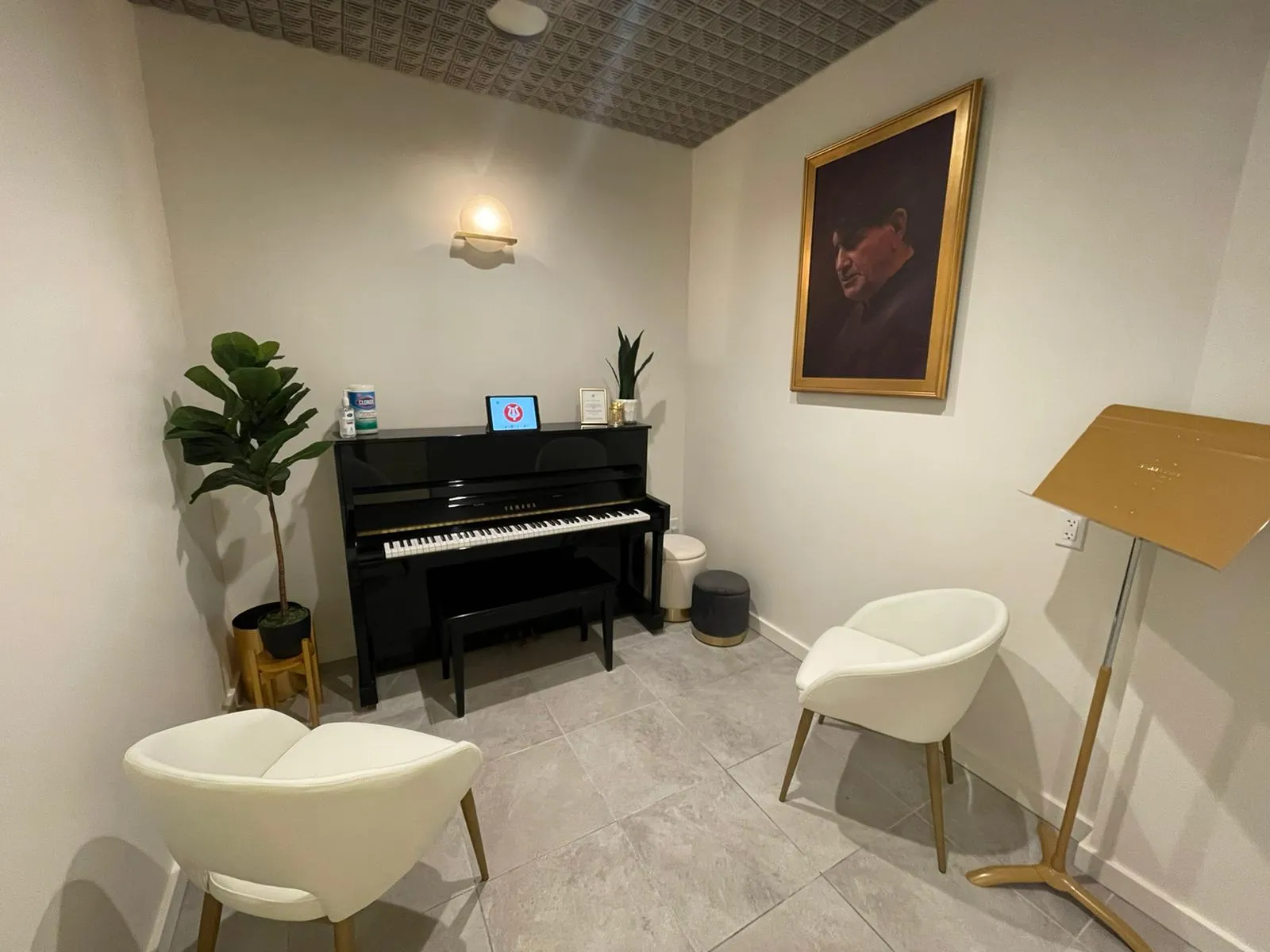
Beach community vibes. People here tend to prioritize balance. Teachers are experienced with returners and folks restarting after life got in the way. Flexible scheduling. Judgment-free space.
Largest service area. Serves Tarzana, Woodland Hills, Encino, throughout the San Fernando Valley. Community-focused. Teachers experienced with a wide range of ages and situations. No commute excuses.
All three branches have teachers who specialize in adult beginners, returners, and people restarting. When you contact us, mention your background. And we'll match you with someone who gets your specific situation.
Final Thoughts
No matter your age or how long it’s been since you last touched a piano, starting again is one of the most rewarding decisions you can make. Adults progress faster than they expect, especially with a teacher who understands adult learning.
Whether you're searching for piano lessons for adults near you, or exploring adult piano lessons as a total beginner, or comparing in-person and online piano lessons, the most important step is simply starting.
If you’re ready, join Angeles Academy of Music for high-quality piano lessons for adults in Los Angeles and begin a journey you’ll never regret.
.svg)
%202026%202027.jpeg)


.svg)

