.svg)
.svg)
.svg)
.svg)
.svg)
So… You Googled “Yamaha Digital Piano”
And now you’re here.
Staring at names like:
P45. P145. P125. YDP. CLP.
They all look the same.
They all somehow cost different amounts.
And honestly, they don’t feel like instruments at first.
They feel like WiFi passwords.
And that’s where it’s easy to get stuck.
Because choosing between yamaha digital pianos and keyboards isn’t really about specs. It’s about understanding what actually changes your experience when you sit down and play.
Not dramatically.
But enough to matter over time.
What Actually Matters (Especially for Beginners)
When you start learning piano, you’re paying attention to one thing only: “How does this feel when I play?”
That includes:
- How the keys respond to pressure
- Whether softer playing sounds different from stronger playing
- Whether the sound feels flat… or slightly expressive
These things don’t sound important until you experience the difference.
And once you do, you can’t un-feel it.
That’s why a Yamaha piano digital piano setup, even at the beginner level, tends to work well. Yamaha has spent decades refining how digital keys respond and how sound behaves when you play differently, not just louder.
Digital Piano vs Keyboard (Quick Reality Check)
Before we get into models, this matters.
A Yamaha keyboard digital piano (like NP or PSR series) is designed for flexibility and ease. Lighter keys, more portability, less resistance.
A Yamaha digital piano (like P45, P145, Arius, Clavinova) is designed to replicate the feel of an acoustic piano. The keys push back. Lower notes feel heavier. Your fingers actually learn control.
If someone plans to stick with piano beyond the first few months, starting with a proper 88-key digital piano usually saves a lot of adjustment later.
Quick Overview: Best Digital Pianos by Yamaha
Quick Overview: Best Keyboards by Yamaha
Now, let’s look at the more elaborate lists.
Budget Range: Affordable Yamaha Digital Pianos and Keyboards ($300–$600)
This is where most beginners land.
And it’s also where the biggest decision happens:
Do you want something that’s easy to start with…
Or something that will hold up as you improve?
Yamaha NP-15 — The Simplest Starting Point
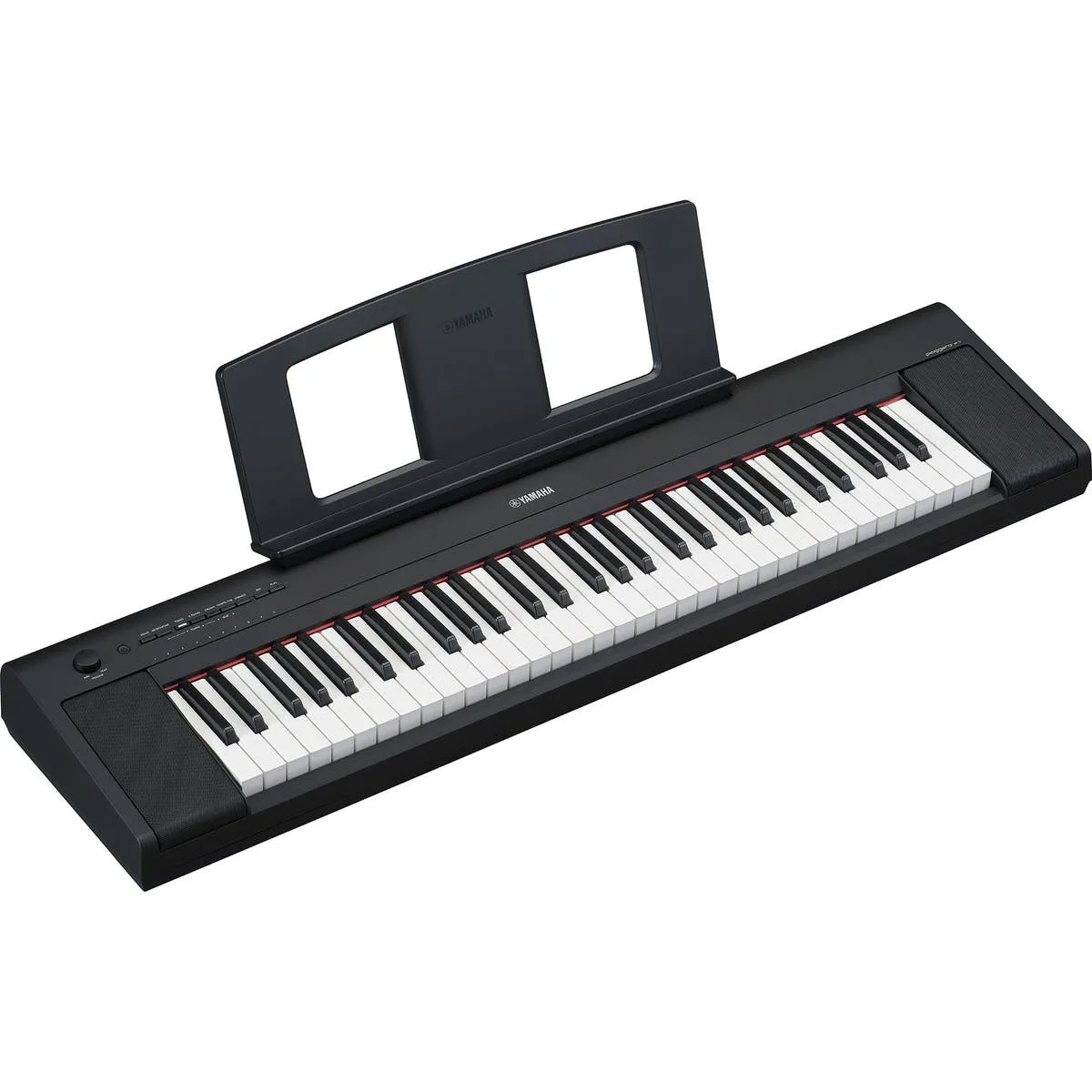
The NP-15 sits right at the entry of the Yamaha ecosystem.
It’s light, minimal, and unintimidating. You can move it around easily, plug in headphones, and start playing without needing a dedicated setup.
For younger students or complete beginners, that ease matters. There’s no friction between curiosity and action.
But here’s the part most guides skip over:
This isn’t trying to behave like a full piano.
The keys don’t have the gradual resistance you’d feel on a real instrument. When you press harder, the change in sound is there, but not deeply expressive.
So what you get is accessibility over depth.
For a short-term start or very young learners, that’s often enough. It builds familiarity with notes, rhythm, and coordination.
But if someone continues beyond that phase, they usually begin to feel the limitation. Not in technical language. Just in experience.
Yamaha P45 Digital Piano (Also Known as Yamaha P71)
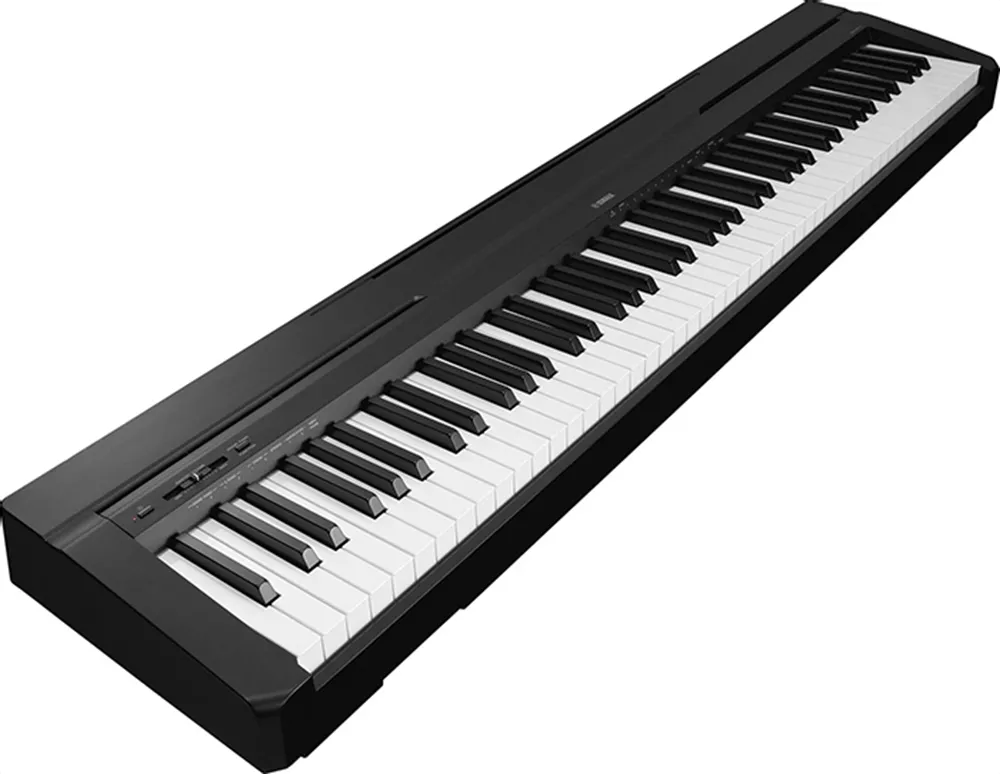
The Yamaha P45 digital piano is one of the most widely recommended beginner instruments for a reason.
This is where things start to feel closer to an actual piano.
The keys are weighted. Not perfectly identical to an acoustic piano, but close enough that your fingers begin learning the right kind of control early on.
More importantly, the sound responds to how you play.
If you press lightly, it’s softer and gentler. If you play with more intention, the tone opens up slightly. That responsiveness is what allows beginners to move from “pressing keys” to actually shaping music.
This model also gives you the full 88-key digital piano range, which matters once pieces expand beyond basic exercises.
Now, where it stays modest:
The built-in speakers are functional but not immersive. And as pieces get more layered, the instrument can only handle a certain number of sustained notes before it starts prioritizing newer ones.
For beginners, that rarely becomes a problem.
Because what the P45 offers is consistency.
It responds the same way every time you play. And that builds confidence faster than features ever will.
Yamaha P145 Digital Piano — The Updated Version
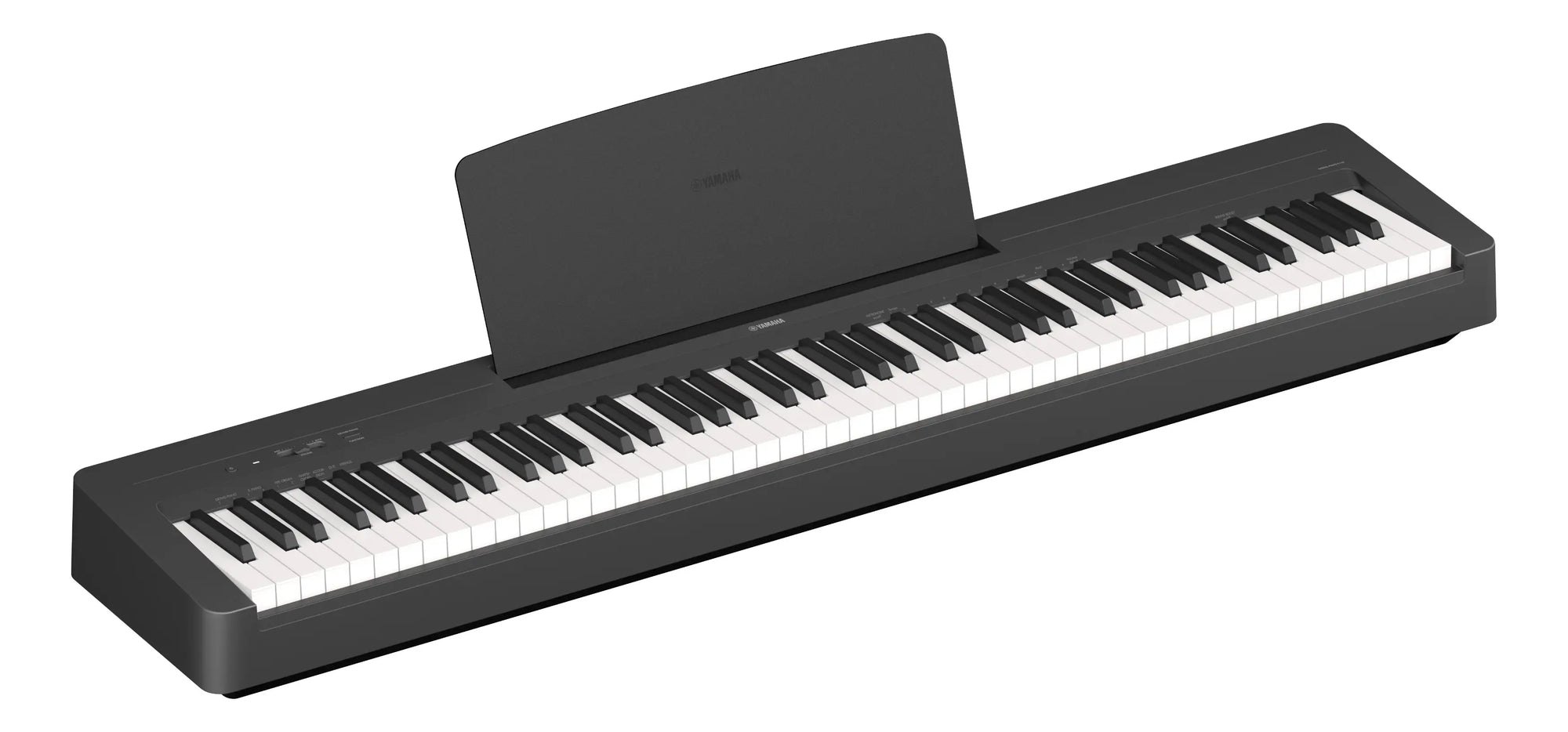
The Yamaha P145 digital piano is essentially the modern replacement for the P45.
At first glance, they look very similar. But over time, the differences show up in subtle ways.
The key action is slightly more refined. The body is slimmer and fits more naturally into modern spaces. The sound engine has been updated to feel a bit cleaner and more balanced.
None of these changes are dramatic in isolation.
But together, they make the instrument feel more stable as a student progresses.
If the P45 is a solid starting point…
The P145 is a slightly more future-proof version of that same idea.
A More Useful Way to Decide (Instead of Overthinking Models)
Most people compare specs.
A better question is: How long do you want this instrument to last before you feel the need to upgrade?
If you’re exploring casually or buying for a young child, an affordable digital piano or keyboard like the NP-15 can work as a low-pressure start.
If you expect consistent learning, even at a basic level, a model like the Yamaha P45 digital piano or the Yamaha P145 digital piano tends to hold up longer without friction.
That difference doesn’t show up on spec sheets.
It shows up in how often someone comes back to practice.
A Quick Note From a Teaching Perspective
We see this pattern a lot with beginners.
Students who start on a responsive Yamaha digital piano tend to adapt faster to dynamics and control, simply because the instrument gives them feedback.
Students who start on lighter keyboards often do fine in the beginning, but eventually need to adjust when transitioning to a more realistic key feel.
Neither is “wrong.”
But they lead to slightly different learning curves.
If you’re somewhere in between options and don’t want to overthink it, we can help you.
Check our private piano lessons in Los Angeles. We work with beginners and parents every week, helping them choose the right starting point based on age, goals, and budget.
Best Yamaha Keyboards
We’ve talked a lot about Yamaha digital piano models so far.
But what about Yamaha keyboards?
This is where people get confused again.
Because Yamaha makes two parallel worlds:
- Digital pianos → designed to feel like a piano
- Keyboards → designed to do more things, but feel less like a piano
Let’s make this real.
Yamaha PSR Series — Flexible, But Not Built for Piano Technique
The PSR series is what most people picture when they think “keyboard.”
Before most people even consider a Yamaha digital piano, they land here.
The “let’s just start something” phase.
Lower budget. Lower commitment. Less pressure.
- Yamaha PSR-E283: ($130–$160): Best for absolute beginners, young kids, and first-time players who want a simple, low-pressure start.
- Yamaha PSR-E383: (around $200): Best for beginners who want more touch response, better sound, and a more engaging “play and explore” experience.
- Yamaha PSR-E473: ($180–$220): Best for players who want more creative tools, more sounds, and a keyboard that can grow with them.
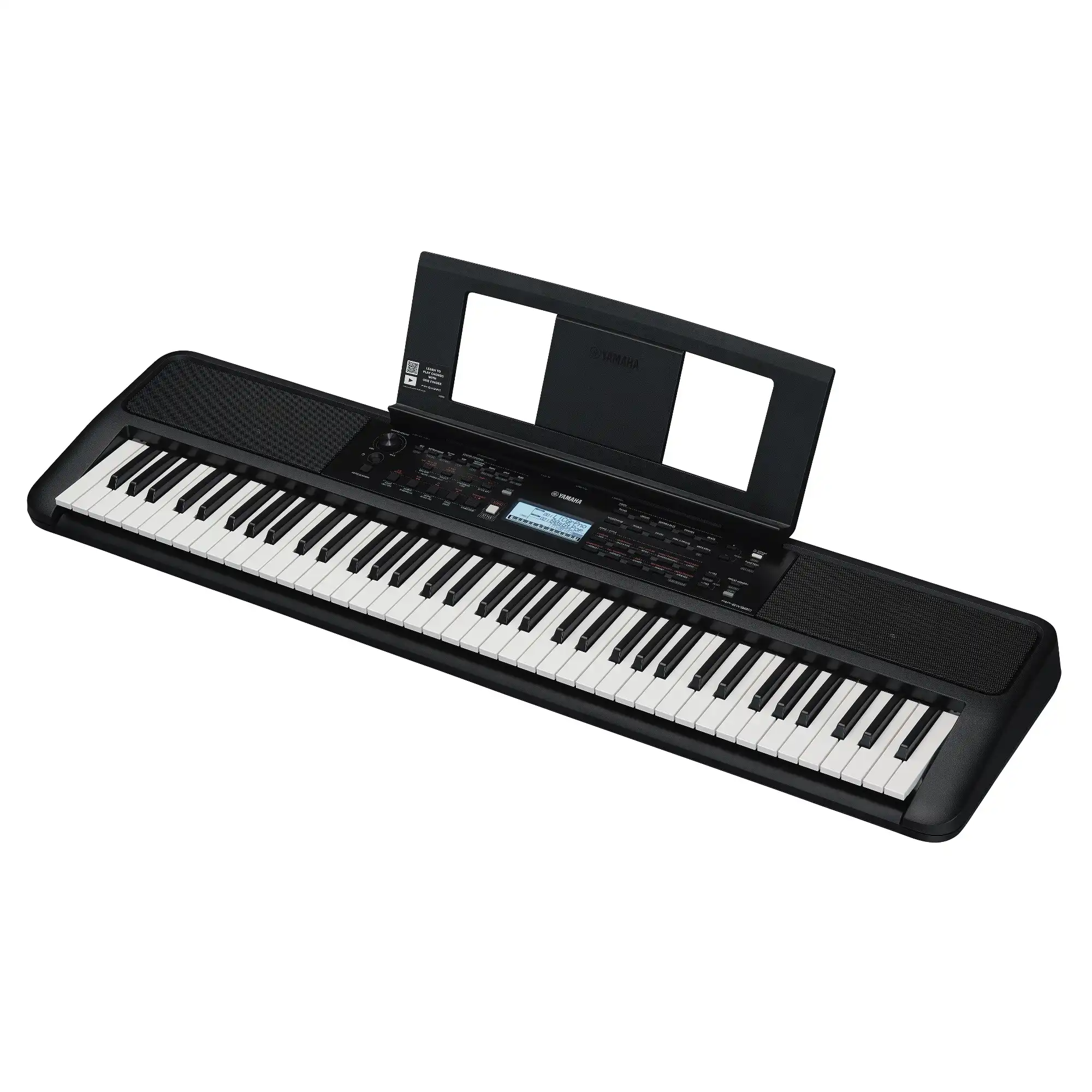
The Yamaha PSR-E383 is probably one of the most common entry points into music.
And it makes sense.
You turn it on, and it immediately feels interactive. There are built-in rhythms, backing tracks, and different instrument sounds. It doesn’t feel like practice yet. It feels like playing.
That’s a big deal for beginners.
Especially kids.
Because at this stage, attention matters more than technique.
It comes loaded with:
- hundreds of sounds
- rhythms and backing tracks
- learning modes
It’s fun. It’s interactive. It’s engaging.
But the keys are light.
Which means your fingers don’t build the same strength or control you’d develop on a yamaha piano digital piano.
Yamaha NP Series — The Middle Ground Keyboard
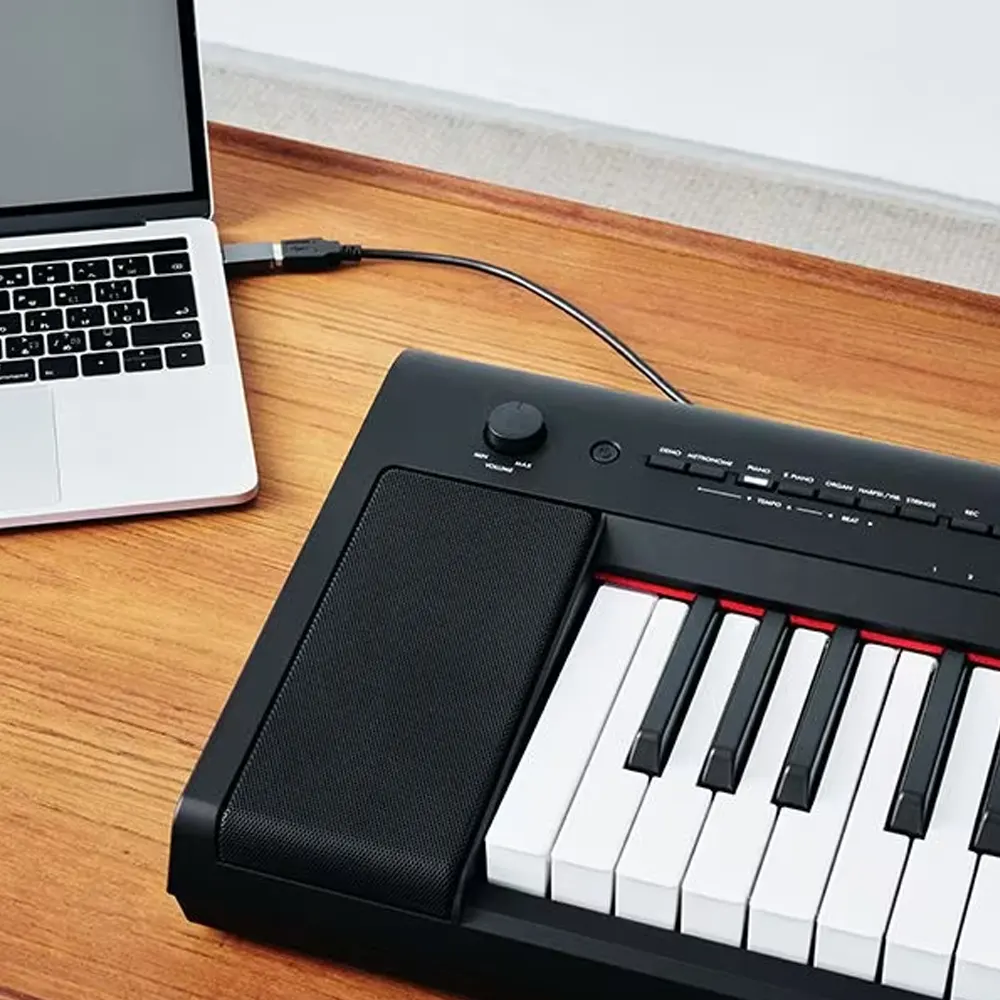
You’ve already seen the NP-15, but it’s worth placing it properly.
It sits between:
- full keyboards (PSR)
- and proper digital pianos (P-series)
It removes distractions but still doesn’t fully commit to piano realism.
- Yamaha Piaggero NP-15 ($200–$250): Best for beginners who want a lightweight, piano-style keyboard with a simple, no-frills feel.
- Yamaha Piaggero NP-35: ($300–$400): Best for players who want 76 keys and a more piano-like layout without the size of a full digital piano.
- Yamaha Piaggero NP-12: older model, often discounted: Best if you find it used or on sale and want a compact, simple starter keyboard.
- Yamaha Piaggero NP-32: older 76-key model, often discounted: Best for players who want a straightforward, space-saving option with a little more range.
That’s why it works well early on… but doesn’t usually last long-term for serious learners.
The $700–$1200 Range — Where People Either Buy Smart… or Overspend
This is where things get a little tricky.
Because everything starts looking really good.
Better sound. Better feel. More features.
And suddenly, every model feels like one small upgrade away from the next.
This is also where most “digital piano reviews” lose people.
Now, let’s get into what actually changes in your experience when you sit down and play.
Yamaha P125 Digital Piano — The First “Serious” Step Up

The Yamaha P125 digital piano sits in that sweet spot where things stop feeling “basic” and start feeling intentional.
If you’ve played the P45 or P145 before this, the difference isn’t dramatic at first.
But give it a few minutes.
You’ll notice two things:
First, the sound feels fuller. Not just louder. More rounded. When you play chords, the notes blend instead of sitting next to each other.
Second, the speakers actually project forward. So instead of the sound disappearing into the room, it comes toward you. That subtle shift makes practice feel more immersive.
Under the hood, the instrument can handle more notes ringing together at once without cutting off earlier ones. You don’t think about it directly, but as pieces get more layered, everything feels more stable.
Who this is for:
This is where I usually point:
- Teenagers or adults starting seriously
- Students who already know they’ll stick with piano
- Anyone who felt the P45 was “good, but a little flat”
This is also where a lot of people land when searching for best digital pianos in a reasonable budget.
Because it doesn’t just start well.
It holds up.
Yamaha P115B Digital Piano — Still Relevant (If You Find It)
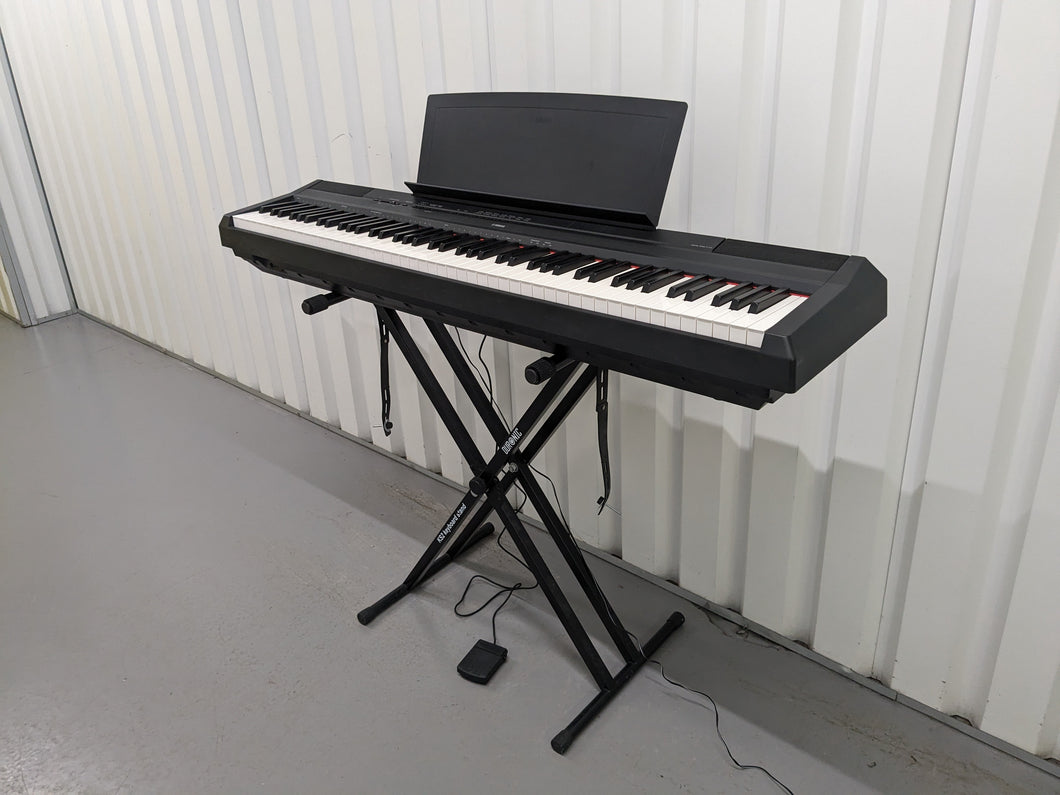
The Yamaha P115B digital piano is technically an older model.
But it still shows up in searches and sometimes in the market, especially as a used digital piano option.
And it’s worth understanding why.
The P115 was basically the earlier version of the P125. Same philosophy. Same direction.
If you find it at a good price, it can still deliver a very solid playing experience.
But if you’re buying new, the P125 makes more sense. It’s just more refined overall.
Yamaha P225 — The Quiet Upgrade Most People Miss
This one doesn’t get talked about enough.
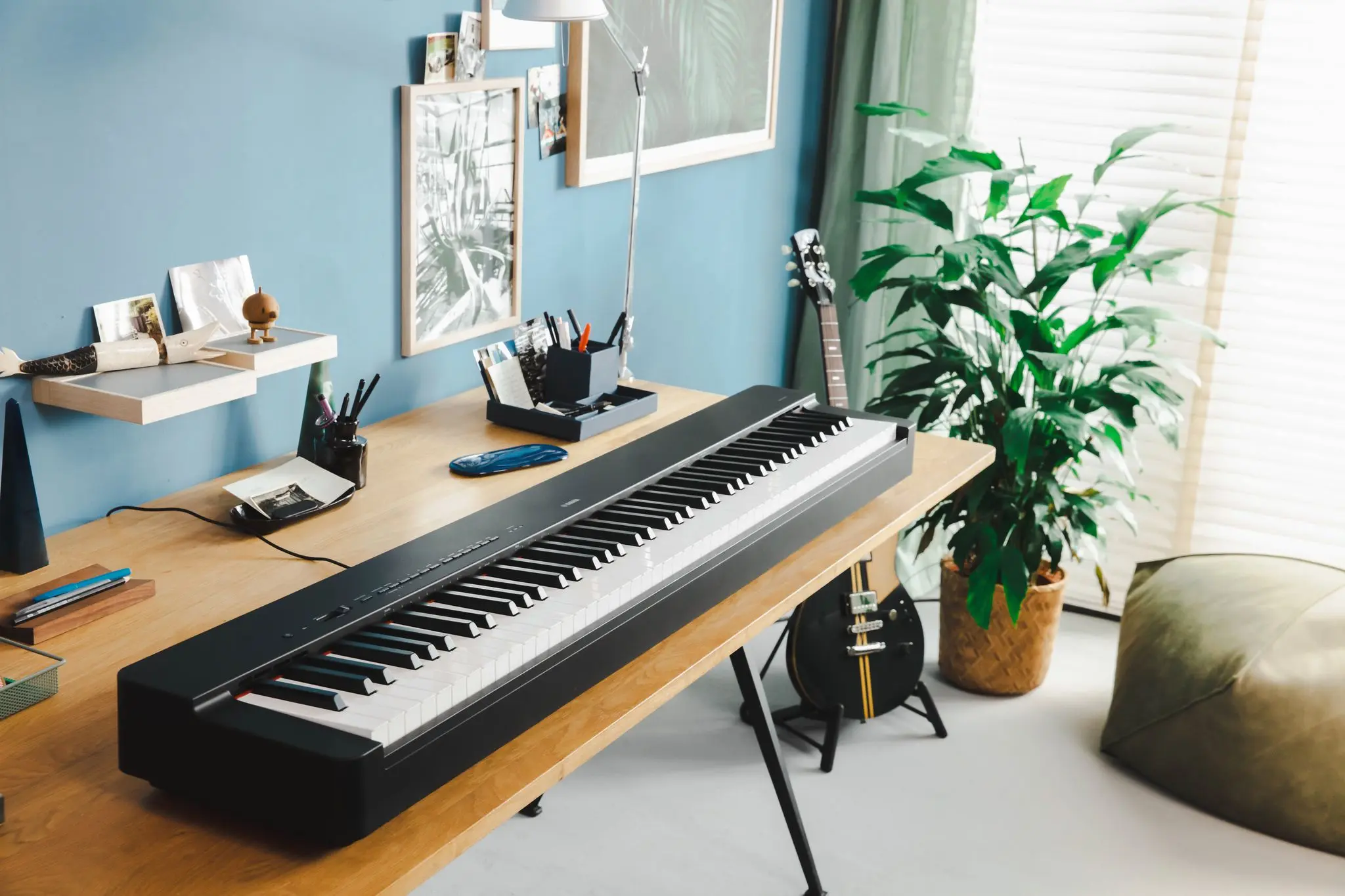
The Yamaha P225 digital piano is what happens when Yamaha takes everything from the P125… and just cleans it up.
Slimmer design. Better responsiveness. Slightly more natural feel.
It also starts bridging into what people call stage digital pianos, meaning you can realistically use it both at home and in small performances.
Who this is for:
- Someone who wants portability without compromising feel
- Students who may perform or move their instrument
- Adults who want something clean, modern, and reliable
If the P125 is the safe choice,
The P225 is the “I know I’m sticking with this” choice.
What Actually Changes in This Price Range
Let’s simplify this without throwing jargon at you.
When you move from entry-level to mid-range Yamaha digital pianos:
You’re not just getting “better sound.”
You’re getting:
- Sound that blends better when you play multiple notes
- Keys that respond more precisely to how you touch them
- Speakers that make playing feel more immersive
- An instrument that doesn’t feel like it’s “struggling” as you improve
It’s less about features.
More about consistency under pressure.
As pieces get harder, these pianos keep up.
If you’re somewhere between beginner and serious, this is exactly the stage where guidance helps most.
We’ve seen students move from P45 → P125 → upright setups over time, and the transition is always smoother when planned right.
If you’re starting lessons alongside your instrument, sign up for our piano lessons in Los Angeles.
Now — The “Feels Like a Real Piano” Category
This is where Yamaha really separates itself.
Yamaha Arius (YDP Series) — Your First Real Home Piano Setup
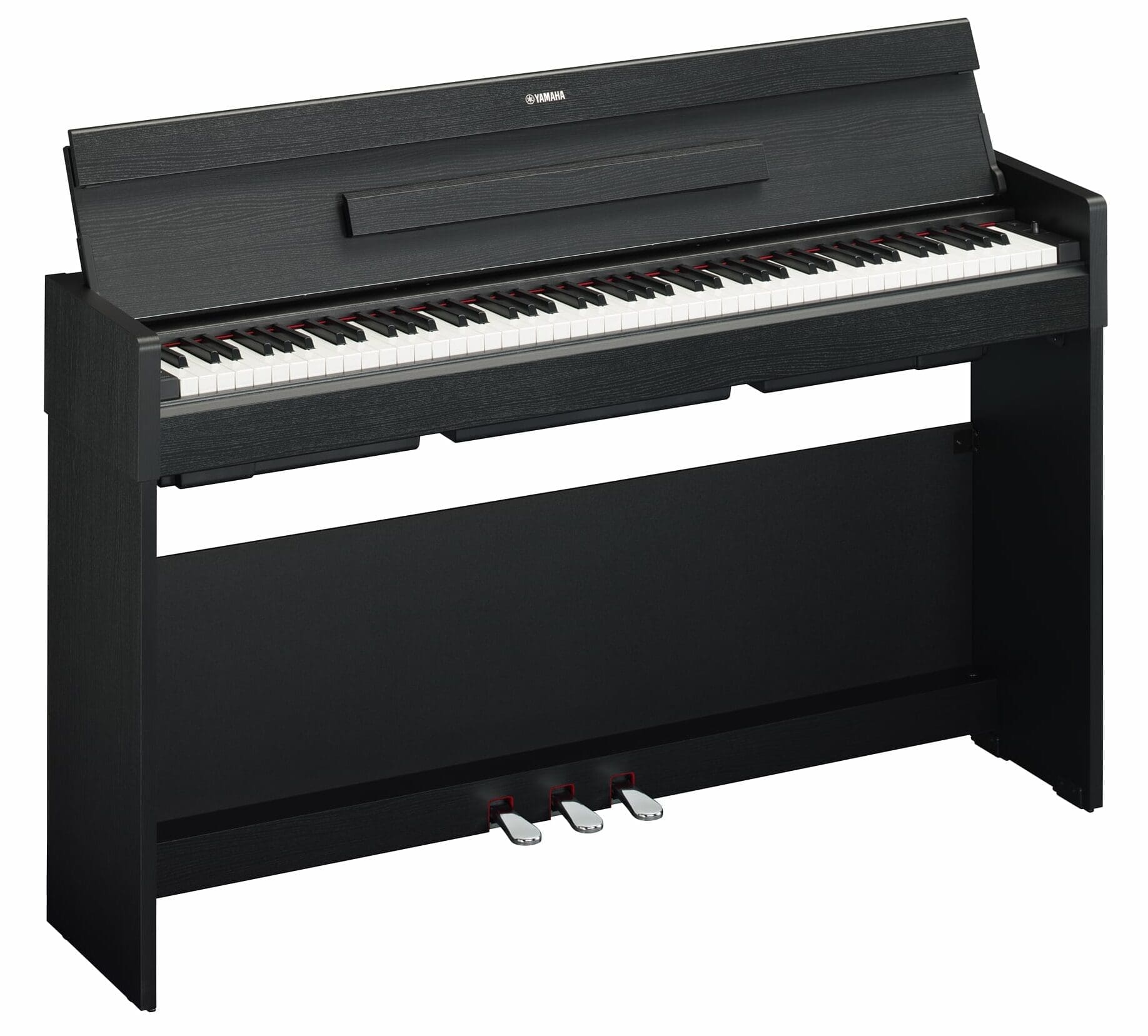
The Yamaha Arius YDP-145 is where things stop feeling portable… and start feeling permanent.
This is a digital upright piano.
It sits in your home like furniture. It has pedals built in. It doesn’t move around.
And psychologically, that matters more than people think.
Because now you’re not “taking out a keyboard.”
You’re going to the piano.
What changes when you sit down:
The sound fills the space more naturally. Not just through speakers, but through how it resonates in the cabinet.
The keys feel more stable under your fingers. There’s more depth in how they respond.
And the pedals feel like actual pedals, not accessories.
Who this is for:
- Families committing to long-term lessons
- Students moving beyond beginner stage
- Adults who want a proper piano experience at home
This is often where people land when searching for:
- digital upright piano
- best digital pianos for home
Because it balances realism and practicality really well.
Yamaha Clavinova Digital Piano — The Premium Experience
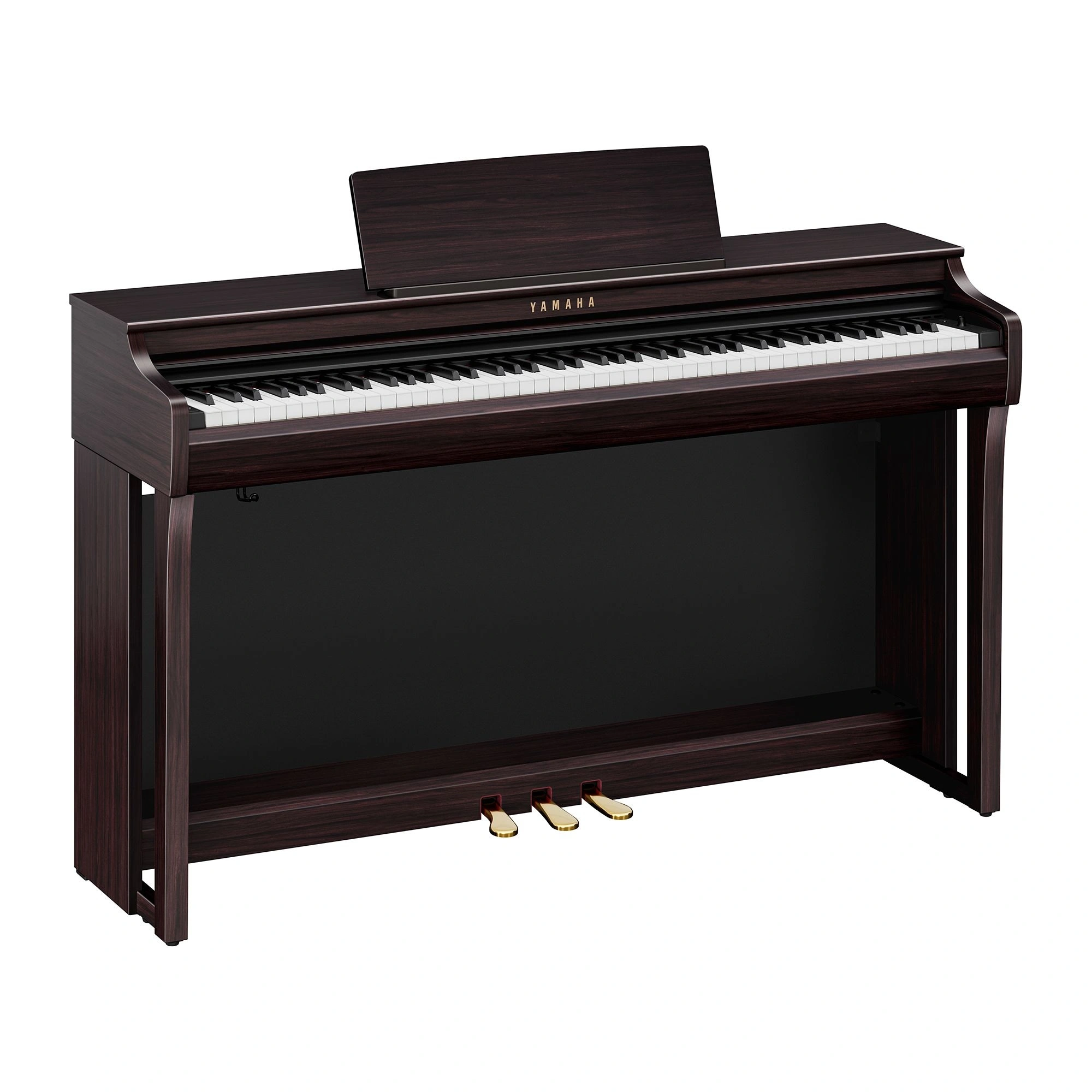
Now we’re at the top.
The Clavinova Yamaha digital piano (CLP series) is what people mean when they say:
“I want something that feels as close to a real piano as possible.”
And this is where it gets interesting.
Because you’re not just paying for better sound.
You’re paying for behavior.
What that means:
When you press a key slowly, the sound doesn’t just get quieter. It changes tone. When you hold the pedal, the notes interact with each other more naturally.
When you play fast passages, the keys reset faster and feel more responsive. These are small things individually.
But together, they create something that feels much closer to an acoustic piano.
Who this is for:
- Serious students (intermediate to advanced)
- Adults returning to piano after years
- Families who want one long-term instrument
So… Which Yamaha Digital Piano or Keyboard Should You Choose?
Let’s simplify everything we’ve covered.
Not in specs. In real decisions.
If you want something:
- Casual, flexible, exploratory → Yamaha PSR
- Simple starting point → Yamaha NP-15
- Proper beginner piano → Yamaha P45 / P145
- Long-term beginner to intermediate → Yamaha P125 / P225
- Home piano setup → Yamaha Arius
- Premium, closest-to-acoustic → Yamaha Clavinova
That’s the ladder.
FAQ
Digital piano vs keyboard — which is better?
Neither is “better.” They’re built for different goals.
A keyboard gives you variety and portability.
A digital piano gives you realism and technique.
If your goal is piano, a digital piano is usually the better long-term choice.
Do I really need an 88-key digital piano?
If you plan to progress beyond basics, yes. Most structured learning eventually uses the full range. Starting with fewer keys works short-term but limits you later.
Should I buy a used digital piano?
A used digital piano can be a good option if:
- It’s from a reliable brand (like Yamaha)
- The keys still feel consistent
- There are no sound or output issues
But for beginners, new models like P145 are often safer and more predictable.
Are Yamaha digital pianos worth it?
In most cases, yes. Not because they’re perfect. But because they’re consistent. Across models, Yamaha tends to prioritize:
- reliable key response
- clean sound
- long-term durability
Which matters more than flashy features when you’re learning.
Final Thought
You don’t need the best piano.
You just need the right starting point.
Something that feels good enough to come back to tomorrow. Because progress in piano doesn’t come from the instrument.
It comes from showing up. The instrument just decides how easy that feels.
If you’re still deciding, or you want help matching the right instrument to your goals, we do this every day with students and parents across LA.
We offer private 1-on-1 piano lessons, beginner to advanced, at Angeles Academy of Music.
.svg)
%202026%202027.jpeg)


.svg)

